
ENGINEERING • COMPUTATION • DESIGN FLOW
EDFS — Electronics Design Flow Studio
Graph-native engineering software for executable, deterministic, and auditable design workflows.
EDFS connects mathematical models, simulation results, RF/EM data, system observables, and higher-order inference into structured engineering flows.
Explore Editions: EDFS Core · EDFS RF · EDFS RF Advanced · EDFS Research
VIEW EDITIONS REQUEST DEMO TECHNICAL DOCUMENTATION
Graph-Native Execution · Mixed-Domain Modeling · RF/EM Integration · NxS Stability · MXD Disk · Deterministic Regression
EDFS Reference Runtime Demonstration
Graph execution, RF/EM fibers, deformation-controlled inference, NxS observables, MXD Disk analysis, and deterministic report generation.
EDFS Editions
One Platform. Four Cumulative Engineering Editions.
Core execution → RF/MW engineering → advanced RF/EM design → full research and experimental capability.
EDFS RF
RF & Microwave Engineering Edition
Everything in Core, plus the CRE-RF execution layer, RF network and S-parameter workflows, deformation analysis, RF geometry, and XiRA Basic.
RF adds
CRE-RF kernels
Touchstone / S-parameters
RF network workflows
Smith / RF geometry
XiRA Basic
Resources
Download Package · RF Documentation · Release Notes · Example Projects · Repository
Training
Quick Start · Workshop · Webinars

EDFS Core
Graph-Native Engineering Foundation
Common graph runtime, numerical execution, projects, provenance, deterministic replay, results, and reporting.
Core includes
Graph editor & project system
Python / NumPy + Octave
Graph Schema v2
Kernel API v1
LaTeX / PDF reporting
Resources
Download Package · Documentation · Release Notes · Examples · Repository
Training
Quick Start · Workshop · Webinars

EDFS RF Advanced
Advanced RF, EM & Adaptive Design Workflows
Everything in RF, plus full XiRA, equivalent-circuit modeling, FSS, reflectarrays, phased-array applications, solver adapters, ranking, and recovery.
RF Advanced adds
XiRA Full
ECM ↔ EM correlation
FSS / reflectarray
Phased-array workflows
HFSS / CST / open-solver adapters
Resources
Download Package · Advanced RF Docs · Release Notes · Validation Examples · Repository

DFS Research
Full Research & Experimental Engineering Edition
The complete EDFS capability stack, extending RF Advanced with MXD-COGN higher inference, radar/AERIS, quantum workflows, and experimental kernels.
Research adds
MXD-COGN
NxS / MXD Disk
Radar / AERIS
Quantum engine
Experimental kernels
Resources
Download Package · Research Documentation · Release Notes · Reference Workflows · Repository
EDFS™ (Electronics Design Flow Studio) — a breakthrough capability from Maxdi Inc / Cognitave that transforms how engineers analyze stability in complex RF, microwave, and high-performance electronic systems.
Traditional stability evaluation focuses on isolated operating points, often leaving critical cross-domain interactions undiscovered until the final integration stages. EDFS™ redefines stability analysis by framing system stability as a deterministic inference closure problem under structured deformation, enabling early detection of latent instability, deeper attribution of failure modes, and audit-grade outputs suitable for regression and certification workflows.
This approach reduces late-stage surprises in design cycles and accelerates both innovation and compliance readiness across RF/MW and commercial electronics development.
Beyond electronics, MXD–COGN extends naturally to:
Control systems and mechatronics
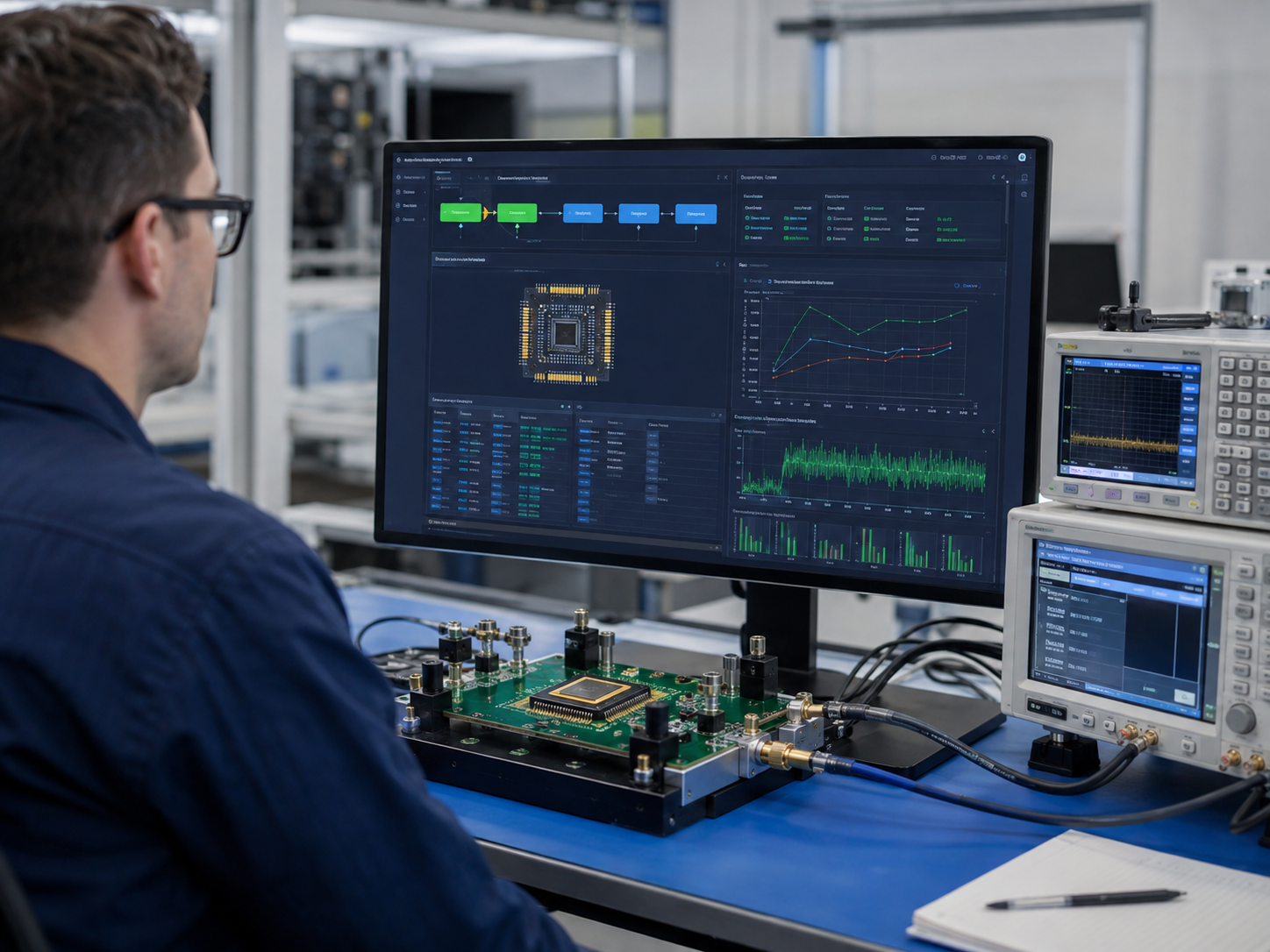
RF/microwave and aerospace-defense systems
Mechanical, civil, and infrastructure networks
Fluid dynamics and catastrophic regime transitions
Micro/nano devices and reliability certification
Chemical, nuclear, and socio-technical systems
Maxdi Research:
{Psychology and Performance}
{RF and Microwave Systems}
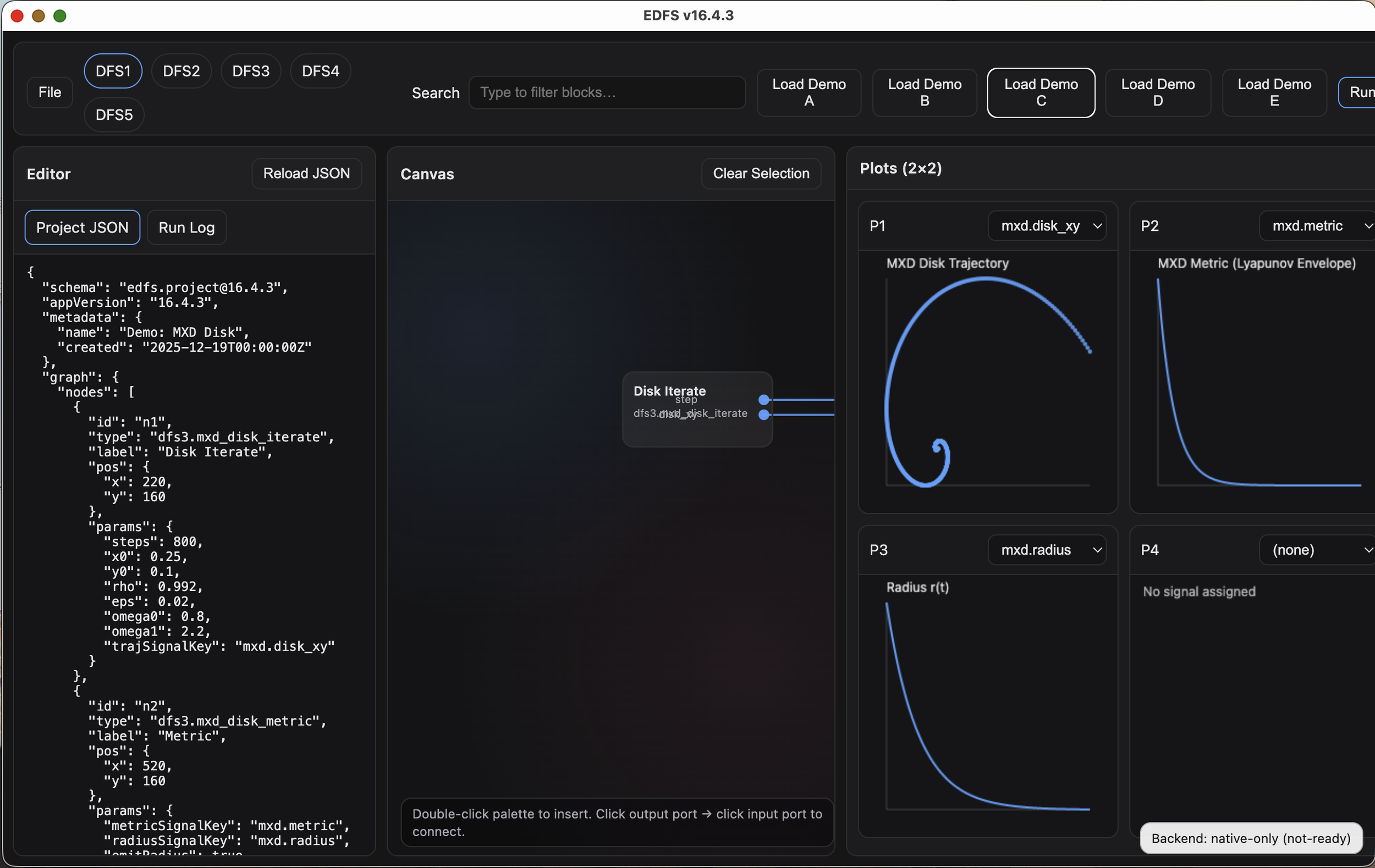
Vision: Electronics DFS is not an EDA tool. It is a design-flow operating system for next-generation engineering.
EDFS redefines electronic design by making the entire workflow executable, deterministic, and auditable—transforming fragmented toolchains into a unified system with explicit causality and multi-domain coherence.
Release Update: Cognitave Inc. R&D is finalizing the beta release of EDFS — Electronics Design Flow Studio, currently engaging select partners across the commercial electronics industry.
🔗 Beta announcement: https://lnkd.in/eU3XjZqY What Electronics DFS Enables Electronics DFS converts engineering workflows into graph-native execution models, where design intent, simulation, and validation operate within a single deterministic framework. Core Differentiators
Graph-Native Execution: Ports, edges, and topological ordering define execution—no hidden scripts, no implicit dependencies. RF/Microwave + Inference Co-Simulation Circuit, RF/MW, and system-level inference are evaluated together, not in isolation.
MXD Disk: A bounded inference-space geometry—analogous to the Smith chart—providing intuitive, quantitative stability insight beyond classical margins. Deterministic Regression and Baseline Blessing Every run is reproducible, testable, and suitable for certification. Offline-First, Air-Gapped Ready Designed for secure, sovereign, and mission-critical environments.
-
EDFS supports RF, electronics, and system teams from concept through validation—accelerating design confidence and reducing late-stage risk.
Areas of Research Interest: RF/MW Engineering, Electronics, Neuro-analog (Neuromorphic) Computing, Automotive Radar, Radar sensing and monitoring, quantum computing, mathematical modeling
-
EDFS (Theory)
Emergent Deformation Field System (EDFS) is a mathematically defined stability geometry derived from deformation-controlled inference. It provides a rigorous, computable framework for evaluating system coherence, stability margins, early-warning indicators, and failure modes across complex, multi-domain systems.EdFS (Product)
Electronics Design Flow Studio (EdFS) and the EDFS Viewer constitute the commercial software implementation of the EDFS theory. EdFS is a graph-native design and analysis environment that operationalizes MXD-COGN order parameters, NxS margins, and MXD Disk geometry for practical engineering use.Proprietary Technology Access
EDFS™ is a proprietary engine and methodology.
Access to the EDFS Viewer, backend computation engine, and associated technical manuals is provided under commercial license for corporate, institutional, and government use.For information on access, licensing, and evaluation programs, visit:
https://www.maxdi.com/researchWhat EDFS Enables
EDFS is designed to support organizations engaged in advanced engineering, systems development, and high-consequence decision environments.
Core Capabilities
Design Flow Software and Techniques
A unified, graph-native design flow for analyzing system stability across electrical, mechanical, control, and multiphysics domains.Simulation-Based Modeling and Analysis
Integration of simulation artifacts (e.g., circuit, EM, control, or multiphysics models) into a deterministic stability evaluation framework.Systems and Control Optimization
Quantitative evaluation of feedback structures, interface sensitivity, and deformation tolerance to improve robustness and performance.Failure Prediction and Early Warning
Detection of metastable and pre-failure regimes before classical margins or domain-specific metrics indicate breakdown.
• • Engineering Insight and Decision Support
Provides actionable stability observables that support design trade studies, certification workflows, and lifecycle risk management. -
Organizations deploy EDFS to:
reduce late-stage integration failures,
improve confidence in complex system designs,
enable earlier and more reliable decision-making,
protect capital investment through predictive stability analysis,
support long-term value creation through robust engineering foundations.
EDFS is not a heuristic tool or visualization layer; it is a deterministic analysis engine grounded in formal mathematics, designed for environments where correctness, auditability, and reproducibility matter.
-
Deformation-Controlled Inference for Confident Electronic & RF System Design
By the Author of the MXD-COGN Textbook — Dr. Haghzadeh, Mahdi
ORCID: https://orcid.org/0000-0002-5438-8923Cognitave Inc., in collaboration with Maxdi Research, provides advanced consulting and professional training services led by the author of the MXD-COGN textbook, introducing engineers and organizations to a fundamentally different approach to electronic, RF, and system-level design evaluation: Deformation-Controlled Order-Parameter Inference.
These services are designed for engineering teams that already use best-in-class simulation and modeling tools, but seek higher confidence, structural insight, and coherence across design, simulation, and measurement workflows.
Core Intellectual Framework
Deformation-Controlled Order Parameter (MXD-COGN)
At the heart of the consulting and training offering is the Deformation-Controlled Inference Order Parameter, a formalism that:
Treats circuit and system behavior as a continuous, deformable state, not isolated simulation points
Preserves structural relationships across bias, topology, frequency, load, and environment
Enables early detection of instability, sensitivity amplification, and hidden coupling
Maintains coherence between simulation outputs and real measurement data
This framework is implemented operationally in Electronics Design Flow Studio (EDFS) through DFS-S Palettes and Software Flow Design (SFD).
Relationship to Industry-Standard Tools (Analysis & Positioning)
EDFS consulting does not replace established tools; it augments and unifies them by treating their outputs as structured observables (“fibers”) within a higher-order inference framework.
Numerical & Symbolic Environments
MATLAB / Simulink
Used for numerical modeling and dynamic simulation.
EDFS consulting shows how MATLAB/Simulink outputs become ordered observables within deformation trajectories, improving stability interpretation and cross-scenario comparison.Mathematica
Symbolic and analytical reasoning is preserved, but embedded into order-parameter evolution, preventing over-reliance on closed-form local solutions.GNU Octave (Octave 8)
Frequently used for parity validation.
EDFS training emphasizes deterministic parity while moving beyond pointwise scripts toward structured inference flows.Python
Python remains a flexible execution layer.
Consulting focuses on when Python is appropriate for numeric execution versus when inference structure must be explicit and auditable (DFS-S).
Circuit & Electromagnetic Simulation Tools
LTspice / QSPICE
Treated as fiber generators producing waveform and operating-point observables.
EDFS consulting clarifies why raw SPICE sweeps alone cannot expose structural instability without deformation context.HFSS
Field-level EM results are integrated as boundary-condition observables rather than terminal conclusions.ADS
RF system simulation outputs are re-interpreted through order-parameter continuity, enabling better correlation across schematic, layout, and measurement.AWR
Nonlinear and harmonic balance results are treated as local projections within a global deformation map.
Software Flow Design (SFD) with DFS-S Palettes
A key component of consulting and training is Software Flow Design (SFD) using DFS-S Palettes inside EDFS.
What This Enables
Explicit modeling of design flows as inference graphs
Separation of:
numerical execution,
structural inference,
visualization and reporting
Deterministic, auditable workflows suitable for engineering review and program management
Why This Matters
Traditional scripts and simulation runs are:
brittle,
context-dependent,
difficult to audit or reproduce.
SFD with DFS-S Palettes turns engineering reasoning into a first-class design artifact.
-
Training & Consulting Offerings
1. Executive & Technical Briefings
Conceptual introduction to MXD-COGN
Why conventional simulation pipelines lose confidence
Strategic implications for complex programs
2. Engineer-Level Training Workshops
Deformation-controlled order parameters
Stability and sensitivity inference
Practical EDFS workflows
Integration with existing toolchains
3. Toolchain Integration Consulting
Mapping existing MATLAB, SPICE, EM, and RF tools into EDFS
Defining what remains a “fiber” vs. what becomes an inference stage
Preventing over-interpretation of numerical artifacts
4. Program-Specific Evaluation Studies
Apply EDFS to a real internal design
Identify hidden instability or sensitivity regions
Produce auditable, management-ready results
Who This Is For
RF, analog, and mixed-signal engineers
System architects
Validation and test teams
Engineering managers and technical program leads
Organizations facing late-stage redesign risk
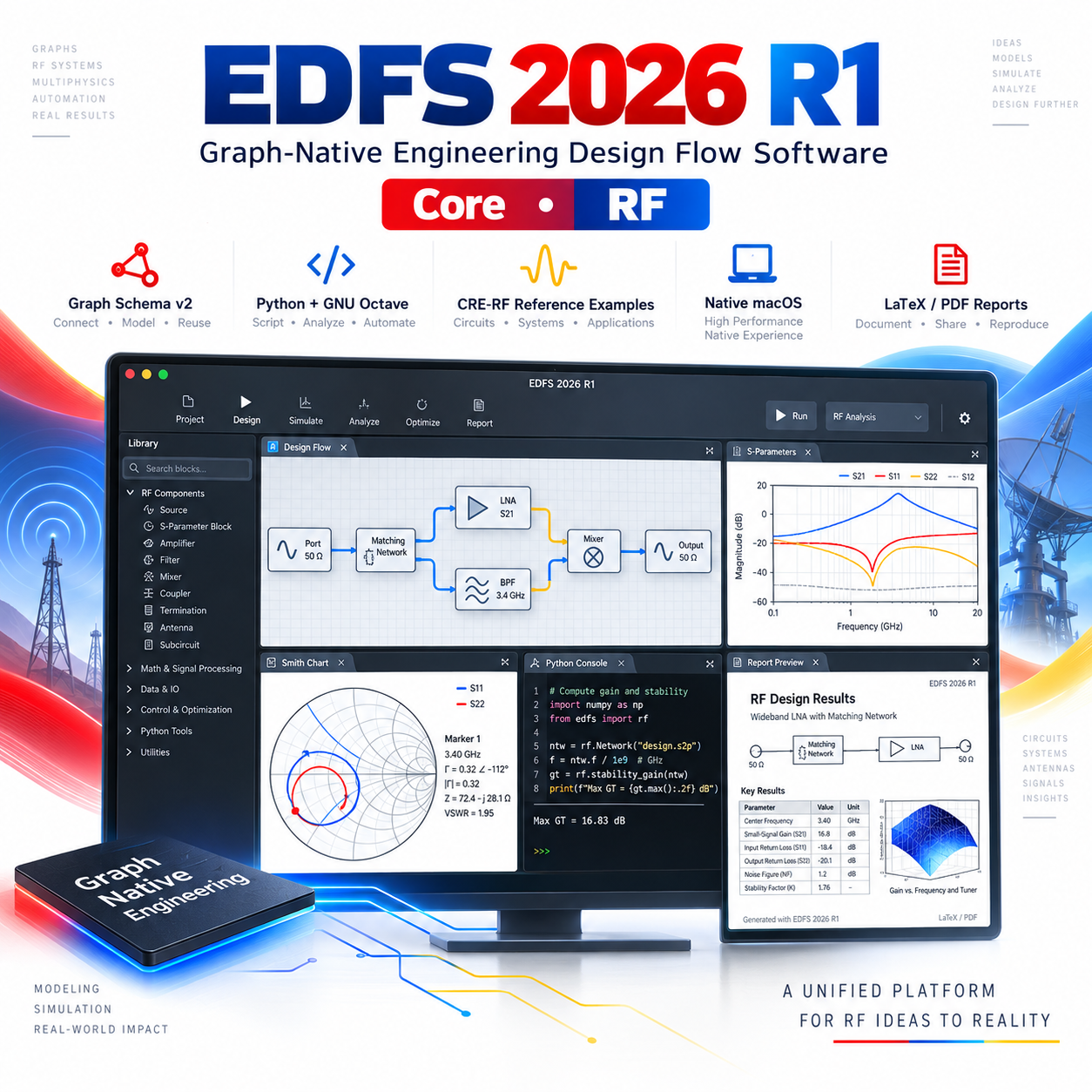



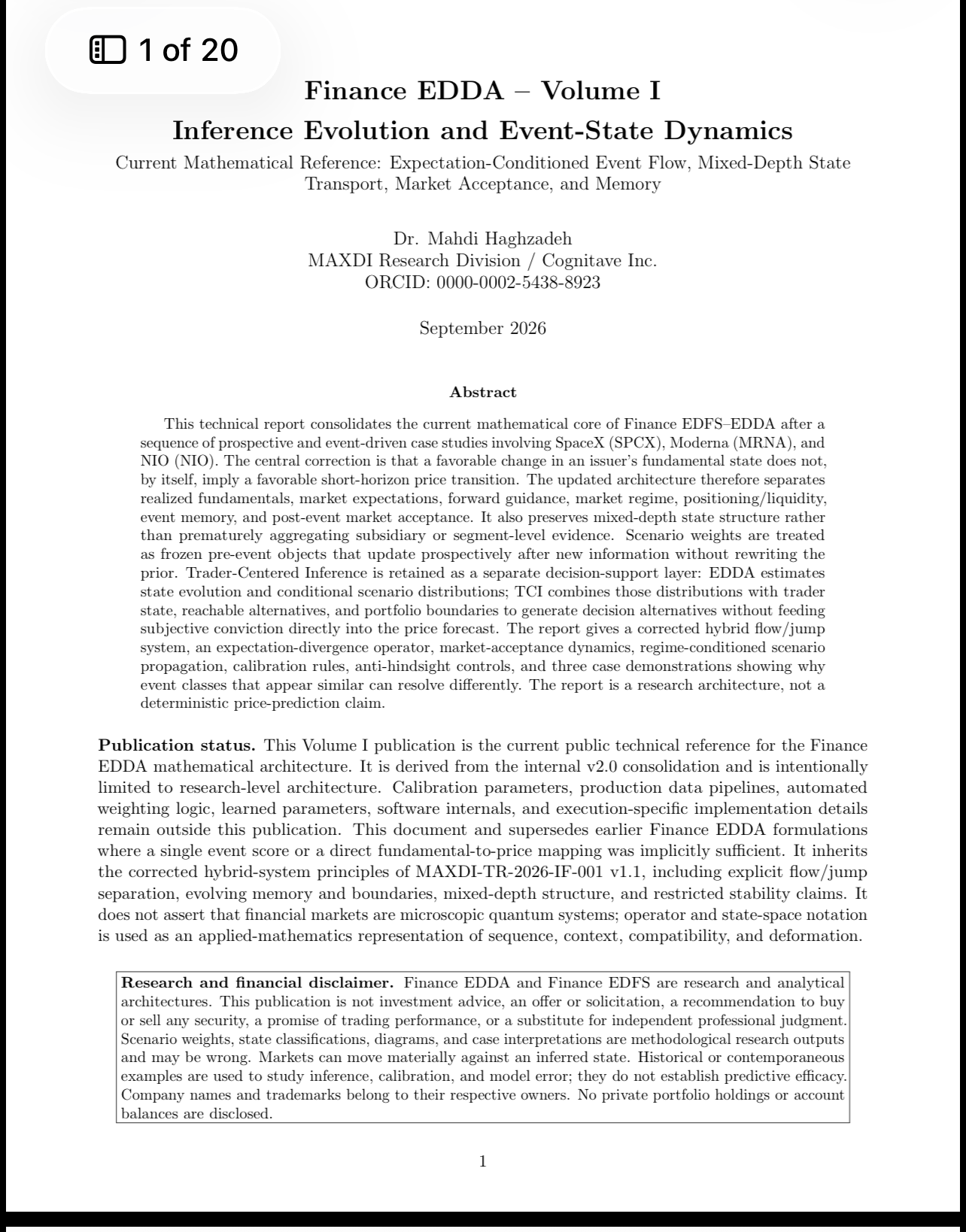
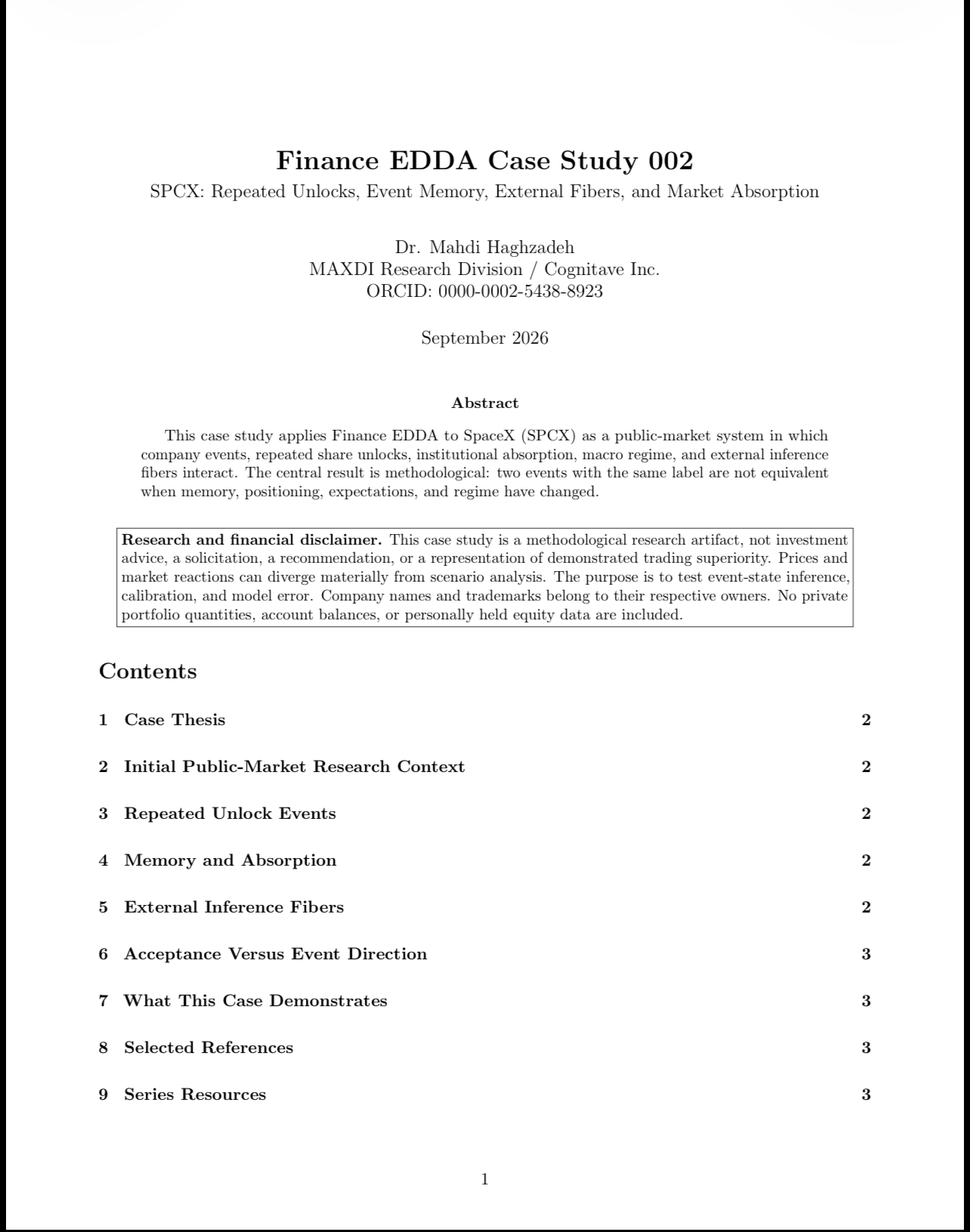
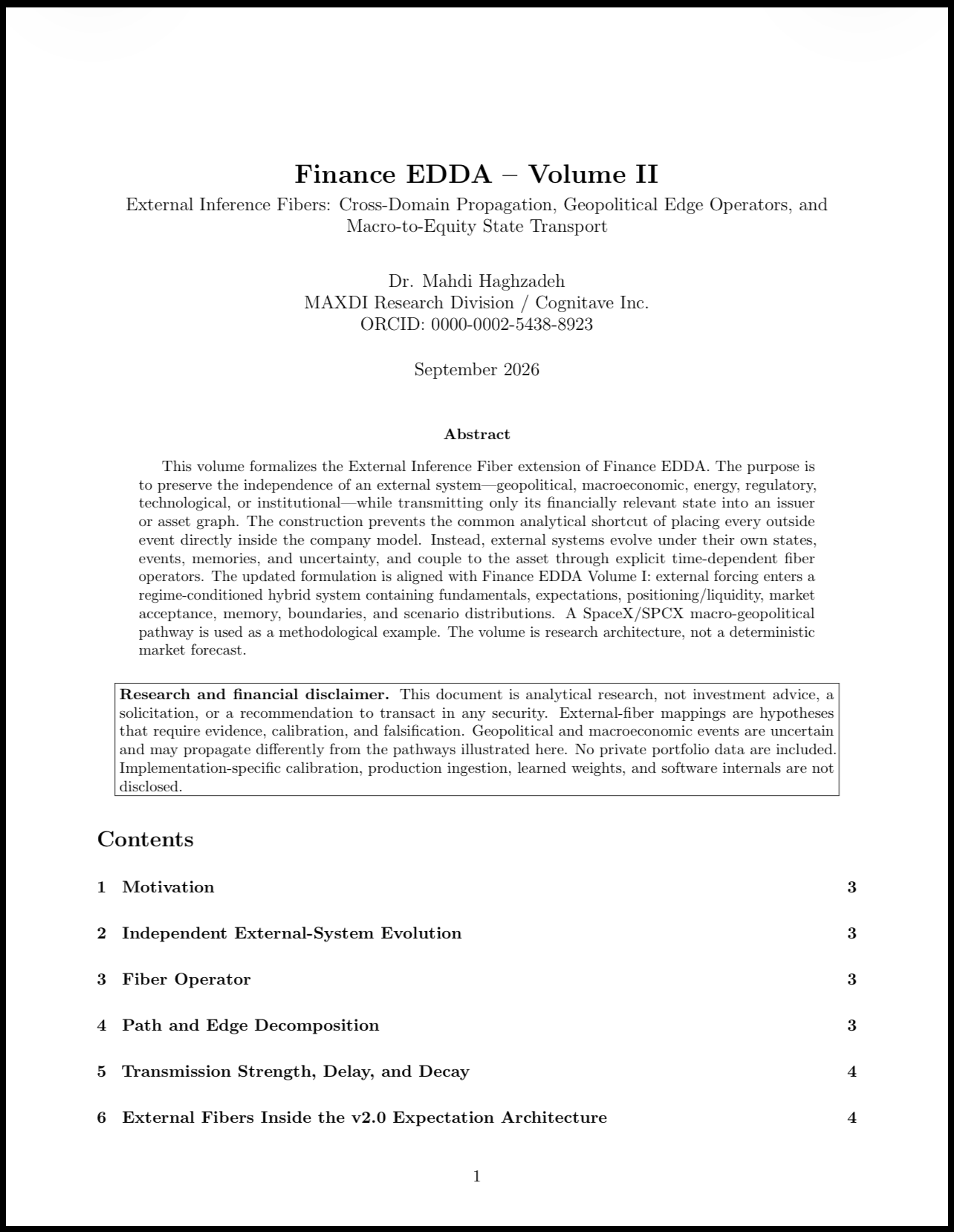
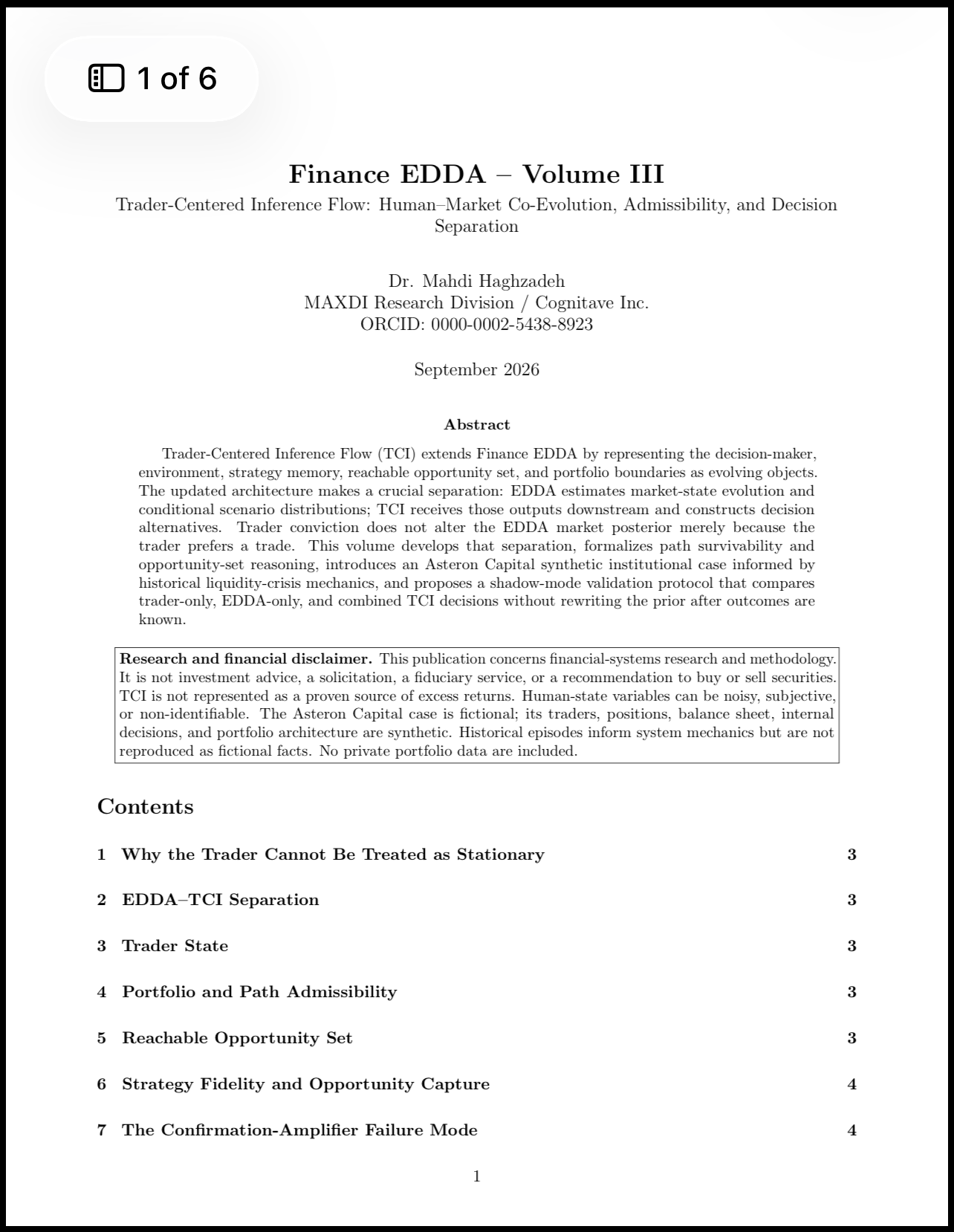
EDFS RF 2026 R1 is a graph-native RF/MW engineering environment for modeling, executing, validating, and documenting RF workflows.
DFS-RF combines typed RF objects, ports, fibers, numerical kernels, provenance, validation state, and engineering evidence in one executable project structure.
Purchase & Download — $1,495
macOS Intel x86_64
DFS-RF Capabilities
EDFS RF includes:
Graph Schema v2 RF workflows
CRE-RF examples E01–E14
Touchstone S1P/S2P source binding
S, Z, Y, and ABCD conversions
network cascade
renormalization
de-embedding
reference-plane translation
frequency alignment
RF network comparison
RF Evidence contracts
numerical assessment and validation
project persistence and replay
HTML, JSON, LaTeX, and PDF reporting
Python and GNU Octave backend support
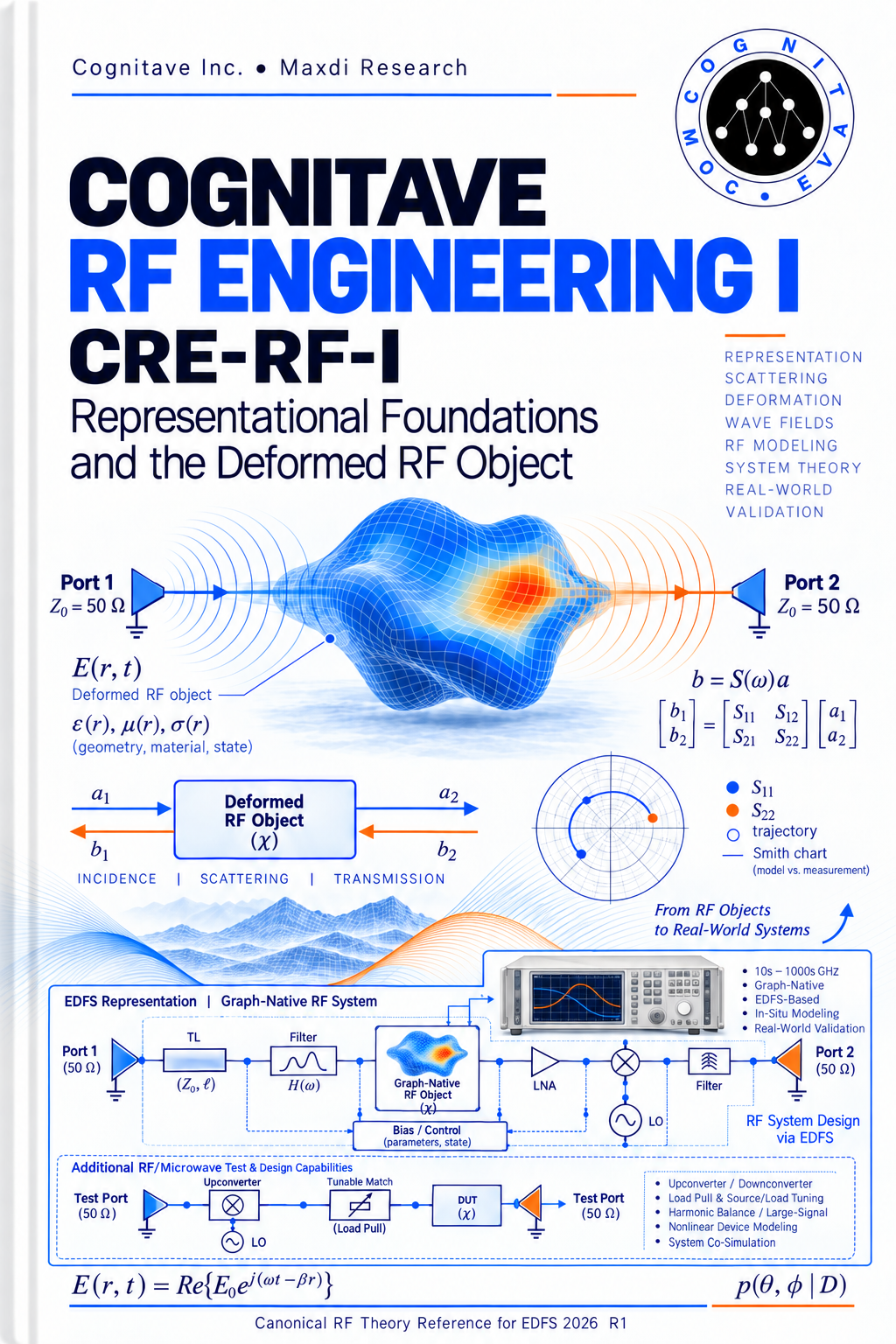
CRE-RF E01–E14
The included verification series progresses from fundamental RF representations to deformation, robustness, and recoverability.
E01–E05
RF objects, Z→Γ, Möbius mapping, transmission lines, and reference-plane transport.
E06–E10
Power and matching, de-embedding, S/Z/Y/ABCD conversion, network closure, Jacobians, and static RF deformation.
E11–E14
RF dynamics, event trajectories, robustness, and bounded recovery/control.
RF Network Engineering
DFS-RF provides reusable graph-native network operators for:
S↔Z,S↔Y,S↔ABCD
Source identity, reference impedance, reference planes, topology, and provenance remain associated with the engineering data throughout the workflow.
Numerical Backends
EDFS RF supports:
GNU Octave — numerical authority where declared by CRE-RF kernels.
Python 3.12 — graph execution, orchestration, QA, and approved numerical implementations.
EDFS does not silently replace an unavailable authoritative backend.
Validation & Evidence
DFS-RF distinguishes:
execution
numerical verification
physical validation
engineering closure
causality assessment
Successful execution alone is not presented as physical validation.
Reporting
RF Report Model v2 produces:
HTML · JSON · LaTeX · PDF
Reports preserve project, graph, source, backend, numerical-result, and provenance information without recomputing engineering results.
Project Integrity
Validated projects preserve historical qualification evidence.
After reopening:
REQUIRES_RERUN
After relevant project modification:
STALE_PROJECT_CHANGED
This prevents old results from being silently treated as current validation.
Release Validation
EDFS RF 2026 R1 Release 1.0.0 completed the Intel release-validation program:
261 / 261 engineering regression tests passed
2 / 2 packaging-policy tests passed
RC1 persistence lifecycle — PASS
RC1 source pre-freeze acceptance — PASS
Native runtime verification — PASS
macOS x86_64 binary — VERIFIED
DMG integrity — VERIFIED
System Requirements
Current release: macOS Intel x86_64
Apple Silicon arm64 distribution will be provided separately after its corresponding release acceptance.
GNU Octave is required for workflows that declare Octave numerical authority.
License
EDFS RF 2026 R1
Professional Single-User License
Includes EDFS RF software, DFS-RF workspace, CRE-RF E01–E14 examples, RF network operators, RF Evidence, reporting, documentation, and downloadable macOS installer.
Purchase & Download
For the actual webpage, I would keep the title around H1, make every section above H3-sized, and reserve larger typography only for the product name and $1,495 price. This will read much more like a professional EDA product page and less like a technical white paper.